“Near-miss effect” in slots: how design shapes player behaviour
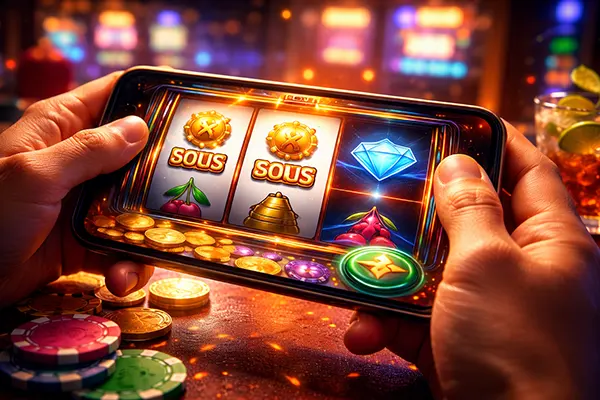
The “near-miss effect” is the uncomfortable moment when a slot spin stops just short of a result that looks like a win: two matching symbols and the third one landing a fraction above or below the payline, or a bonus symbol appearing but not quite completing the trigger. Even though it is still a loss, many players report it feels different from an ordinary miss. In 2026, this effect matters because it sits right at the intersection of game mathematics, screen design, and human psychology—three things that can quietly push a session to run longer and cost more than intended.
What a “near-miss” really is (and how modern slots manufacture it)
In technical terms, a near-miss is a losing outcome that is arranged to appear subjectively close to a winning configuration. On mechanical, single-payline machines, this often meant the classic “cherry–cherry–lemon” pattern: visually close to the jackpot symbol set, but still a loss. With today’s multi-line and multi-way slots, near-misses can be presented in several ways at once: a bonus symbol “just missing” on one reel, a high-paying symbol stopping adjacent to a payline, or a scatter landing in a near-complete pattern across the grid.
What makes this possible is the separation between what you see and how the game is weighted. Many slots use virtual reel mapping (or similarly named weighting methods) where some symbols occupy more “stops” than others, shaping how frequently they appear. Designers can tune how often the screen shows “almost” patterns without changing the overall long-term return that the maths is targeting. That means a near-miss can be a deliberate part of the experience rather than an accidental by-product of randomness.
Near-miss presentation is also supported by pacing and attention design. Slower reveals, reel “teases”, and small animations that highlight a symbol hovering near the payline create a sense of suspense. Even when the outcome is already determined, the player’s attention is guided to interpret the spin as a story: building towards a win, then failing at the last moment. That narrative framing is one reason near-misses can feel more memorable than routine losses.
Common near-miss patterns you’ll recognise in 2026 slot design
A classic pattern is the “tease” on the final reel: two bonus symbols land early, and the last reel spins longer before stopping one position away from the third symbol needed to trigger the feature. Another is the “adjacent stop” illusion, where a high-value symbol lands immediately above or below a payline while the payline itself shows a low-paying result. On grid slots, a similar trick is the almost-complete cluster: one missing tile that would have formed a large win shape.
Audio and micro-animations amplify these patterns. Many games shift music as soon as two scatters appear, add a rising sound effect, then cut it sharply when the third symbol fails to land. Some titles flash frames around relevant reels, dim unrelated parts of the screen, or use vibration on mobile to heighten anticipation. The point is not to lie about the outcome, but to make the “close call” feel emotionally louder than the rest of the spin.
It is also common to combine near-misses with “salience overload”: lots of small visual events that make the screen feel busy and rewarding even when the balance is going down. In the UK, regulators have specifically targeted one version of this problem—losses disguised as wins—because celebratory feedback on a net loss can distort a player’s perception of results. Near-misses sit in the same family of design choices: they turn a loss into something that feels like it contains information or promise.
Why near-misses can increase play: psychology and brain response
From a behavioural perspective, near-misses are powerful because they can be misread as progress. A normal loss gives the brain a clean signal: “nothing happened.” A near-miss, by contrast, looks like evidence you were “close”, and that can quietly support the belief that the next spin might convert that closeness into a win. This is not the same thing as rational probability, but it is a very human way of interpreting streaky outcomes.
Researchers have also shown that near-misses can increase the urge to continue, even when players rate the outcome as unpleasant. In lab tasks that mimic slot-style outcomes, near-misses have been linked with activity in brain areas that also respond to rewards, such as parts of the striatum, and with regions associated with bodily arousal and attention, such as the insula. The key detail is that a near-miss can “borrow” some of the motivational signature of a win without delivering any money.
Another ingredient is perceived control. Slots are games of chance, but many products include interactions that feel skill-like: stopping reels, choosing bonus items, or tapping to “collect”. Evidence suggests near-miss effects can feel stronger when someone believes their actions matter, even if those actions do not change the outcome. That combination—near-miss plus a sense of agency—can be especially sticky, because it invites the player to think, “If I do it slightly differently next time, I’ll get there.”
When near-misses become risky: chasing, time distortion, and memory bias
In real sessions, near-misses can contribute to chasing behaviour: increasing stakes or extending play to “finish the job”. Importantly, most players will not do this all the time, and near-misses alone do not create harm. The risk grows when they stack with other factors: long sessions, late-night play, high-speed spins, and a mindset of “I’m due”. Near-misses feed that mindset by making losses feel informational rather than final.
They also contribute to time distortion. A near-miss creates a peak of attention and arousal; peaks are what memory retains. Over a session, a player may later recall “so many close calls” and underestimate how many plain losses happened in between. That skewed memory can make a game feel more generous than it was. In practice, this is one reason players sometimes feel surprised when they check their deposit history after a session that felt “nearly there” again and again.
A practical warning sign is language. If you catch yourself thinking in phrases like “it keeps teasing me”, “I’m getting closer”, or “one more and it’ll hit”, you are describing the near-miss effect in action. At that moment, the most effective intervention is not analysis—it is interruption: a short break, a hard stop set by a timer, or switching to a non-gambling activity that resets attention. The aim is to stop design-driven momentum from becoming a decision you would not make with a clear head.
Regulation and safer play: what changed and what players can do in 2026
Regulators increasingly treat game design as a consumer protection issue, not just a fairness issue. In Great Britain, the Gambling Commission introduced major online slot design restrictions in 2021, including a ban on autoplay, limits on spin speed (no faster than 2.5 seconds), and a prohibition on losses being presented with celebratory win effects. These rules do not remove near-misses, but they reduce the intensity of high-speed, high-feedback play that can make near-misses more persuasive.
Since then, the UK framework has continued to tighten in areas that sit next to product design, such as affordability-style checks and improved consumer choice measures rolling out in stages through 2024 and 2025. The practical implication for players is that the “shape” of regulated play is changing: more friction when spend escalates quickly, more prompts, and fewer features that encourage rapid-fire betting. For operators, it creates pressure to design engagement without relying on speed and sensory overload.
Outside the UK, approaches vary, but the direction of travel is similar: clearer information, stronger safer-gambling tools, and more scrutiny of features that can mislead. Near-miss design is tricky to regulate directly because it is not a single button you can ban; it is a family of presentation choices. That is why the most realistic protection is a combination of rules (limiting the riskiest mechanics) and player tools (making it easier to stop, cool off, and review spend honestly).
How to protect yourself from near-miss pull without relying on willpower
Start with limits that are set before the first spin: a fixed money limit you can afford to lose, a fixed time limit, and a rule that you do not reload once either limit is hit. The near-miss effect targets “one more spin” thinking, so limits must be externalised—written down, set as deposit caps where available, and backed up by a phone timer. If you only decide “I’ll stop when I feel done”, you are handing the stopping decision to the same emotional system the game is stimulating.
Use session transparency tools. In regulated environments you can usually see net spend, session history, and reality checks. Make a habit of checking net position at set intervals (for example, every 15 minutes), not only when you feel you are “close”. Near-misses distort memory; hard numbers correct it. If you do not like what you see, the most effective move is to stop immediately rather than trying to “fix” it inside the same session.
Finally, treat near-misses as design, not destiny. A near-miss is not evidence that a win is coming, and it is not proof you are improving. It is a loss formatted to feel close. When you reframe it that way, you can make calmer choices: stepping away, switching to lower stakes, or not playing at all if you are tired, stressed, or chasing. If gambling has stopped feeling like entertainment and started feeling like a problem to solve, it is worth using formal support options (self-exclusion, blocking software, or confidential help services in your country) rather than trying to manage it alone.